The gift that couldn’t grow anything.
Last spring a woman in my Wednesday group mentioned she had inherited a house. Everyone congratulated her. She sat there smiling with her hands folded and waited until the room moved on before she told me, quietly, that the roof leaked, the foundation had shifted, and the property taxes were already late. She owned a house she could not live in. The inheritance was real. The ability to use it was missing.
A Wedding Gift in the Desert
There is a woman in the book of Joshua that almost nobody has heard of. Her name is Achsah, and she is Caleb’s daughter. Caleb, the spy who came back from Canaan at eighty-five and asked God for a mountain, gave his daughter in marriage to Othniel as a reward for capturing a city. The wedding gift was land in the Negev.
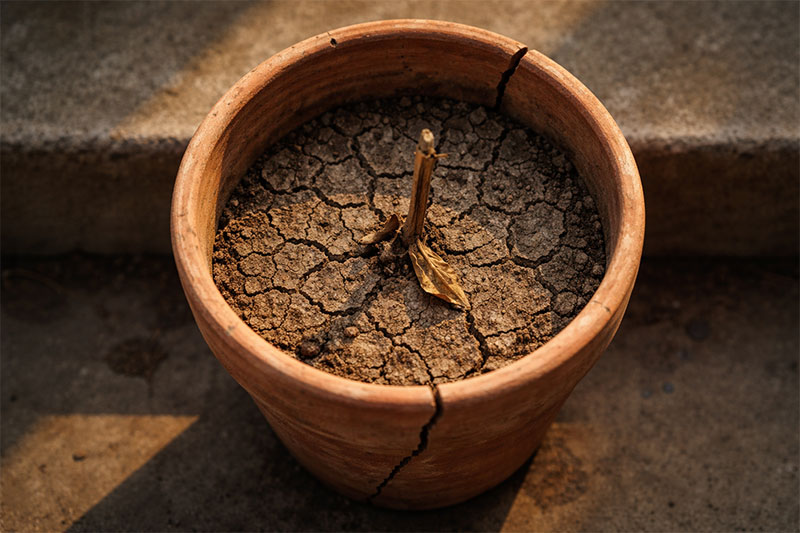
The Negev is desert. Dry hills, dust, sun that bakes the ground until it cracks. You can own a thousand acres of it and starve. Land without water is a promise without a way to keep it.
She replied, “Do me a special favor. Since you have given me land in the Negev, give me also springs of water.” So Caleb gave her the upper and lower springs.
Joshua 15:19 (NIV)
Achsah dismounted her donkey, walked up to her father, and asked for the thing that would make the gift work. She accepted what she had been given and then looked at it honestly. She identified what was missing and asked for it by name.
What She Understood That Most People Don’t
The land was generous. Caleb was not withholding. He gave what he had to give, and it was real and measurable and hers. The problem was that the gift, as given, could not sustain life. Achsah saw this clearly enough to act on it, which is the part most people skip. She could have accepted the land, thanked her father, and spent years hauling water from miles away, slowly draining herself to maintain a gift that was never designed to function alone.
Instead she asked. One sentence. One specific request. Springs of water. And Caleb, who could have taken offense, gave her both the upper and the lower springs, more than she asked for.
The Prayer Most People Never Pray
There is a version of faith that accepts whatever arrives and calls gratitude the refusal to want more. It looks holy from the outside. It wears out the person carrying it. Somewhere along the way, many of us absorbed the idea that asking God for something specific, something practical, something that names what is actually missing, is greedy or faithless. We received the dry land and we are hauling water in silence.
Achsah’s prayer was clarity. She knew what the gift needed to become what it was meant to be. She knew her father well enough to ask. She trusted that specificity honored the giver, because it meant she intended to use what she had been given rather than let it sit barren.
James wrote something that has bothered comfortable theology for centuries:
You do not have because you do not ask God.
James 4:2 (NIV)
That verse is about the strange human habit of settling for the incomplete version of what God has already begun.
Springs You Haven’t Named
I meet people every week who have received something real from God and are quietly exhausted trying to make it work without the one thing they have never asked for. The marriage that survived but has no intimacy. The faith that returned but carries no joy. A calling they accepted with no support for it, no rest inside, no permission to say this is harder than I expected. They own the land. They are dying of thirst on it.
Achsah’s story takes up four verses in Joshua and four verses in Judges, repeated almost word for word because the editors thought it mattered enough to record twice. A woman who received a gift, saw what it lacked, and had the holy nerve to go back and name it. Caleb gave her more than she requested. That detail matters. The asking did not diminish the relationship. It deepened it.
Most of the people who find this page have been sustaining something good on their own for longer than anyone around them realizes. I know because they write to me after, and the sentence is almost always the same: I did not know I was allowed to ask. If you are reading this on a morning when the weight of maintaining something alone has finally become louder than your pride, someone else will reach that same morning. They will need words waiting for them the way these waited for you, and you can be the reason they are still here.
Whatever you have been given that you are trying to sustain on your own, whatever dry ground you walk every day telling yourself you should be more grateful, consider that the gift was always meant to come with water, and the only thing missing is the asking.