When the willing spirit lives in a frame that has started saying no.
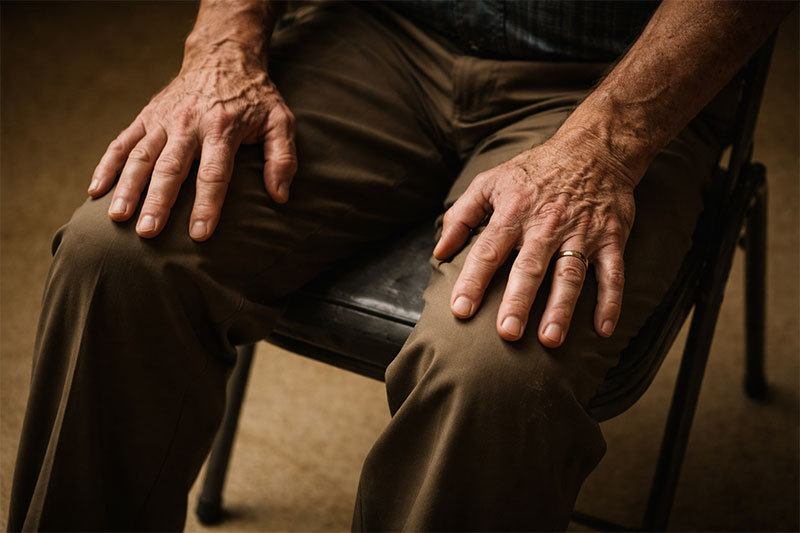
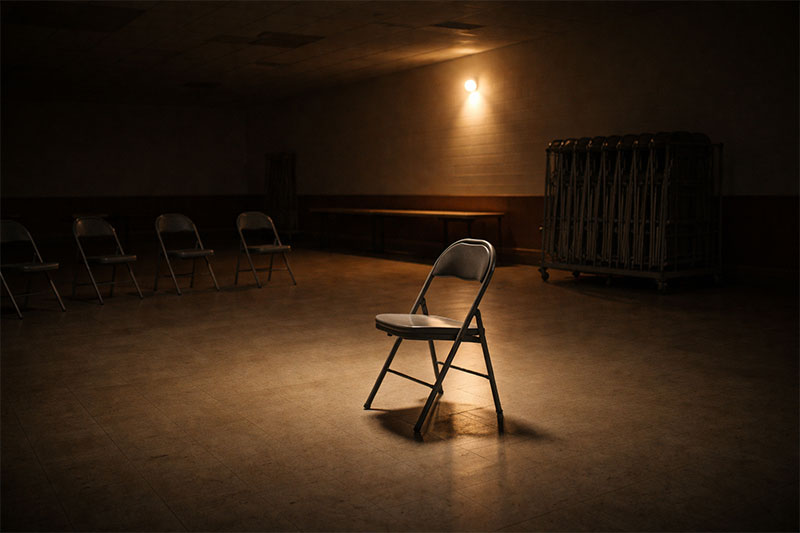
Last October, a man I have known for years showed up to help set chairs before a community dinner. He used to arrive early enough to arrange the entire hall by himself, sixty chairs in rows of ten, tables unfolded and dressed in fifteen minutes. This time he managed four chairs before he had to sit in the fifth. He stayed there for a while, hands on his knees, looking at the fifty-six remaining chairs with an expression I have never been able to forget. It was the face of someone watching a door close from the inside.
He told me later he had been fine with the diagnosis. Fine with the medications, the sleeve of pill bottles on the kitchen counter, the stairs he now takes one at a time. What he could not make peace with was the gap between what he wanted to do and what his body allowed. The spirit was all there. The knees were finished.
The Verse Everyone Borrows for the Wrong Reason
Jesus said “the spirit is willing, but the flesh is weak” in Gethsemane, talking to disciples who had fallen asleep during the worst night of his life. The context was fatigue, failure, the body pulling rank over intention. But the verse has traveled far beyond that garden. It lives now in the vocabulary of anyone over sixty who still wants to serve, still sees the need, still feels the pull to show up, and finds that showing up costs more than it used to.
Watch and pray so that you will not fall into temptation. The spirit is willing, but the flesh is weak.
Matthew 26:41 (NIV)
There is a particular grief in that sentence when the weakness is permanent. The disciples woke up. The knees do not wake up. The back does not decide to cooperate again. And somewhere in the distance between desire and capacity, a quiet question forms that most people never say out loud: if I cannot do the things that made me useful, what exactly am I for?
A Body That Decays and a Self That Does Not
Paul wrote to the Corinthians from a body that was falling apart. Beaten, stoned, shipwrecked, carrying what scholars believe was a chronic condition he begged God three times to remove. God said no. And from inside that no, Paul wrote one of the strangest lines in Scripture.
Therefore we do not lose heart. Though outwardly we are wasting away, yet inwardly we are being renewed day by day.
2 Corinthians 4:16 (NIV)
Paul named the wasting plainly, the body declining, and then placed something next to it that moved in the opposite direction. Two things happening at once in the same person: the frame getting smaller, the interior getting larger. Paul trusted that equation enough to keep going. The man who could no longer set up sixty chairs had spent forty years letting his hands be his ministry. His hands still worked. His legs had simply changed the terms of how far those hands could travel.
The Prayer That Admits the Loss
Psalm 71 is an aging person’s prayer, and it does not pretend. The psalmist asks God plainly for what he fears most.
Do not cast me away when I am old; do not forsake me when my strength is gone.
Psalm 71:9 (NIV)
That verse carries the fear directly to God without dressing it up in theology. The psalmist says “please do not leave,” and there is a raw honesty in that request that earns its place in Scripture precisely because it refuses to skip the hard part. The strength is going. The person knows it. And instead of performing peace about the loss, he tells God the truth about it.
Smaller Rooms, Closer Walls
Limitations do not end ministry. They change its shape. The man who arranged sixty chairs now calls three people a week from his kitchen table, people who live alone and hear a human voice so rarely that they sometimes cry at the sound of the phone ringing. His body made that choice for him. And the people on the other end of that line would tell you it matters more than chairs ever did.
This is the part no one warns you about: the ministry that fits the smaller frame is often the ministry that was needed most. A handwritten note to someone in the hospital weighs more than a hundred stacked chairs. A prayer spoken slowly over the phone with someone who cannot leave their house carries farther than a van full of donated groceries. The room gets smaller. The walls get closer. And sometimes, closer is exactly the distance at which God does his most careful work.
I have learned something about the people who read these pages. Many of them arrive on a morning when something they used to do without thinking required help for the first time, and the sting of that moment sent them looking for a word that fit. Someone before you sat with that same sting and decided the words that met them here should still be waiting when the next person went looking. If that matters to you, you can help keep them here.
The spirit is willing, and the flesh is weak, and both of those things can be true in the same body at the same time without one of them canceling the other.