
The longest days of faith happen when the person you love most has made themselves unreachable.

There is a coffee mug in the cabinet that belongs to your son. It has been there since August. You could move it to the back, behind the ones you actually use, but you leave it in the front row where you see it every morning. You do not think about why you leave it there. You just leave it there.
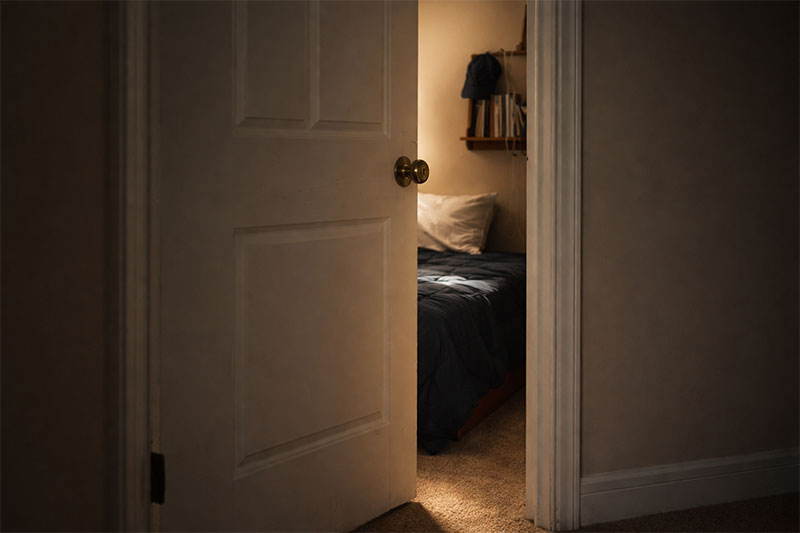
His old bedroom is down the hall with the door half open the way he left it. Some of his things are still on the shelf, arranged in an order that made sense to him, and you have not rearranged them because rearranging would mean something you are not ready to say out loud. He calls sometimes. Not often. You can hear the distance in his voice before he says a single word, and you have learned to keep your questions short because long questions make him hang up faster.
The Gap in the Story
The parable of the prodigal son is one of the most told stories in Scripture, and almost every retelling skips the hardest part. We hear about the leaving. We hear about the return. The son asks for his inheritance, which in that culture was the same as saying “I wish you were dead.” He takes the money and disappears into a far country.
“Not long after that, the younger son got together all he had, set off for a distant country and there squandered his wealth in wild living.”
Luke 15:13 (NIV)
Then Luke jumps. The next time we see the father, the son is already on his way home and the father spots him from a long way off. Between verse 13 and verse 20 there is a gap the size of years, and the text says nothing about what happened inside it. The son’s story during those years gets told: famine, pig troughs, hunger, humiliation. The father’s story gets silence.
That silence is where millions of parents actually live.
What the Father Could Not Do
The father in this story was a man of means. He had servants, land, a fattened calf ready to slaughter, a ring to put on a finger. What he did not have was the ability to intervene. He could not follow his son into that far country, could not stop the money from running out, could not stand between his child and the consequences that were coming as surely as weather. He had raised this boy, fed him, taught him, loved him with everything a father has to offer, and the boy walked out the door carrying all of it and none of it at the same time.
If you have watched an adult child walk into a life you can see but cannot touch, you know exactly what that doorway feels like. You know the specific helplessness of a parent who has done everything they know how to do and now must do the one thing no parent is built for: wait.
The Discipline of the Watching
There is a detail in verse 20 that Bible readers pass over too quickly. When the son finally comes home, the text says the father saw him “while he was still a long way off.” That phrase tells you everything about the years in between. Fathers in first-century Palestine did not stand on the road scanning the horizon by accident. He had been looking. Day after day, probably from the same spot, watching the same road that carried his son away, waiting for a silhouette he would have recognized at any distance.
“But while he was still a long way off, his father saw him and was filled with compassion for him; he ran to his son, threw his arms around him and kissed him.”
Luke 15:20 (NIV)
The running is what gets all the attention. Commentators love the running because in that culture a man of standing did not run; it was undignified, and the father did not care. But before the running there were months, maybe years, of standing still. Of looking down that road and seeing nothing. Of going back inside the house and sitting with the quiet and getting up the next morning to look again. The running lasted thirty seconds. The watching lasted as long as the son was gone.
That is the part of this story that Jesus chose not to narrate, and I think the silence was deliberate. Some seasons of faith have no story to tell because nothing happens in them except endurance. You pray the same prayer. You leave the door unlocked. You keep the mug in the front row of the cabinet. And the road stays empty, and you go to bed, and you get up and look again.
Every week I sit across from someone in that season, and the thing they all share is the belief that they are the only parent still watching a road that empty. They are not. There are more of them than any of us will count, scattered across different houses with different mugs left in different cabinets, and most of them will never say it to a person but will search for it alone on a screen long after the house has gone quiet. If these words found you in that hour, someone who knows what the watching costs made sure they would be here when you arrived.
The Road He Kept Watching
If you are in the middle of that gap right now, living between the leaving and the return that has not happened yet, I want you to notice one thing about this father. He held the door open with one hand and his grief with the other, and he watched a road that gave him nothing back for a very long time. That is its own kind of faith, the kind no one preaches about because it has no triumphant ending yet, no music, no fattened calf. Just a man on a hill, scanning the horizon, still believing his son remembers the way home.
Some prayers are a mug left in the front of the cabinet and a bedroom door you refuse to close.