
Four verses that three thousand years of scholarship still cannot explain.
There is a paragraph in your Bible that no one has figured out. Scholars have been arguing about it since before the Dead Sea Scrolls were hidden in their caves. Pastors skip it. Study guides treat it like a speed bump on the way to Noah. It sits right there in Genesis 6, four verses long, and if you read it slowly you will stop and read it again, because it sounds like it belongs in a different book entirely.
I love this passage. I love it precisely because it refuses to be tamed.
The Strangest Paragraph in Genesis
Here is what the text actually says:
When human beings began to increase in number on the earth and daughters were born to them, the sons of God saw that the daughters of humans were beautiful, and they married any of them they chose. Then the Lord said, “My Spirit will not contend with humans forever, for they are mortal; their days will be a hundred and twenty years.” The Nephilim were on the earth in those days — and also afterward — when the sons of God went to the daughters of humans and had children by them. They were the heroes of old, men of renown.
Genesis 6:1-4 (NIV)
Read that again. Sons of God. Daughters of humans. Nephilim. Heroes of old, men of renown. And then the text moves on to Noah building an ark as though nothing unusual just happened. No explanation. No footnote from Moses. No angel appearing to clarify. Four verses that land like a rock through a window, and the narrative keeps walking.
Three Thousand Years, Three Answers
The earliest Jewish interpreters, the ones who wrote 1 Enoch and the Book of Jubilees, read “sons of God” as angels. Fallen angels who crossed a boundary between heaven and earth, took human wives, and produced offspring so extraordinary the text calls them heroes and men of renown. This was the dominant reading for centuries. The early church fathers Tertullian and Justin Martyr held it. The logic is straightforward: “sons of God” in Job 1:6 and Job 38:7 clearly refers to angelic beings, so Genesis 6 means the same thing.
Then Augustine pushed back. He argued that “sons of God” meant the descendants of Seth, the righteous line, and “daughters of humans” meant the descendants of Cain, the corrupt line. The sin was intermarriage between the faithful and the faithless, a dilution of devotion that grieved God enough to send a flood. This became the preferred reading for most of church history, partly because it avoided the uncomfortable image of angels having physical relations with women.
A third reading emerged later. “Sons of God” as ancient kings or rulers, powerful men who took women by force, tyrants whose unchecked power corrupted the earth. This fits the ancient Near Eastern context where kings were often called sons of the gods, and it explains God’s grief without requiring anything supernatural beyond the text itself.
Each interpretation has evidence. Each has problems. The angelic reading explains the language but raises questions Jesus seemed to settle in Matthew 22:30 when he said angels do not marry. The Sethite reading avoids those questions but struggles to explain why the offspring would be called Nephilim, a word linked to the Hebrew for “fallen” or possibly “giants.” The royal reading fits the context but feels like it domesticates something the text clearly intended to be strange.
What the Silence Says
Here is what interests me most. The Bible could have explained this. Genesis is careful with genealogies, precise with numbers, deliberate about who begat whom and why it mattered. The author who recorded the exact dimensions of the ark and the specific date the floodwaters receded chose to leave these four verses without a single word of commentary. That silence is doing something.
I have sat in Bible studies where someone raises Genesis 6 and the room splits in three directions within five minutes. People who agree on almost everything else in Scripture will argue about the Nephilim with a strange intensity, as though solving this passage would unlock something important. Maybe it would. Or maybe the passage was never meant to be solved.
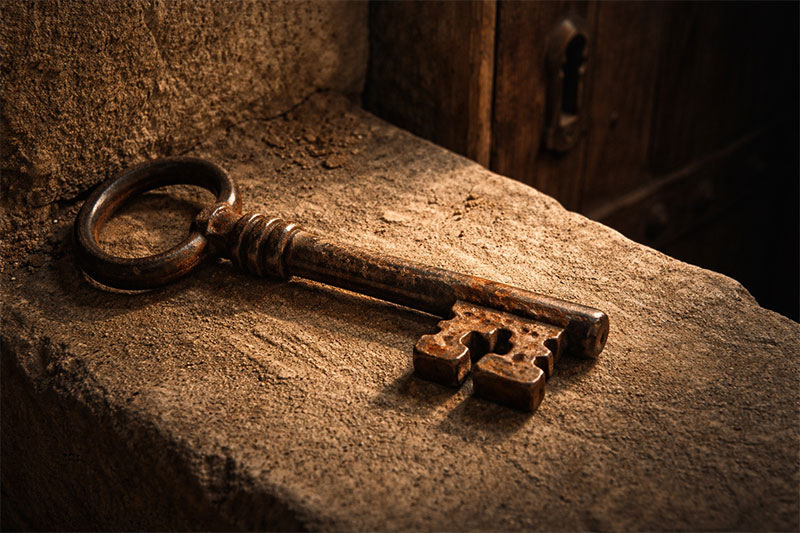
Scripture contains things that resist our categories. We want the Bible to be a book we can finish, a puzzle where every piece fits if we study long enough. Genesis 6:1-4 quietly refuses. It sits there, four verses deep, reminding us that the God who revealed himself across sixty-six books also chose, deliberately and without apology, to leave certain rooms locked.
I get letters sometimes from people who searched not for an answer to Genesis 6 but for permission to stop needing one. They are the readers who have been in the faith long enough to know the standard positions and honest enough to admit none of them fully satisfy. If you found this page that way, sitting with a question you have carried quietly because the people around you seem more certain than you feel, I want you to know that someone before you felt the same thing and kept this page here so it would be waiting when you arrived.
The Locked Room
I think the passage survives because the mystery is the point. The Bible is a revelation, and revelation means showing, which also means choosing what remains hidden. The Nephilim passage has outlasted every attempt to domesticate it for a reason the scholars keep circling without quite landing on: some truths are meant to be carried, the way you carry a question that keeps you honest about how much you do not know.
Three thousand years of commentary, and four verses in the sixth chapter of Genesis still have the final word.