
The tears that already knew the ending.
My mother cried at every single one of my graduations. Kindergarten, eighth grade, high school, college. Four ceremonies, four times I looked into the audience and found her face already wet. I never understood it. I was fine. I was walking across a stage, not leaving the country. The tassel was moving from one side to the other, and she was reaching for a tissue like something had broken.
Years later I asked her about it. She laughed and said she couldn’t help it. She knew I was fine, knew the diploma was coming, knew it was a happy day. The tears came anyway, because she was there, standing inside a moment that mattered, and her body understood something her calendar already knew.
The Shortest Verse Hides the Longest Question
Most people know John 11:35 as trivia. The shortest verse in the Bible: “Jesus wept.” It shows up in Bible quizzes and church youth groups, a fun fact to fill the silence between harder questions. Two words, easy to memorize, easy to move past.
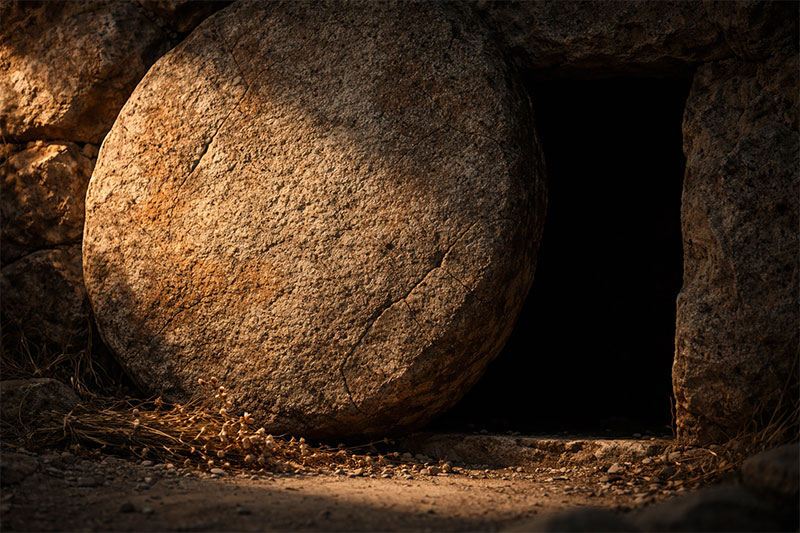
What most people never stop to ask is why. Jesus stood outside the tomb of Lazarus, a man he loved, and he wept. He had already told his disciples what was coming. “This illness does not lead to death,” he said back in verse four. He delayed two full days before traveling to Bethany, because the timing had to be right. He knew the ending before he arrived at the grave.
So why the tears?
What Happens Right Before He Weeps
The verse everyone quotes is 35. The verse that explains it is 33.
When Jesus saw her weeping, and the Jews who had come along with her also weeping, he was deeply moved in spirit and troubled.
John 11:33 (NIV)
The Greek word translated “deeply moved” is embrimaomai. Scholars have argued about it for centuries because it carries heat. It can mean a groan, a shudder, something closer to indignation than sadness. Some translations soften it. The original does not. Whatever Jesus felt in that moment shook him at a level deeper than composure could hold.
And what triggered it was simple. He saw Mary weeping, saw the crowd around her weeping. He walked into a room full of grief and his response was to enter it with his whole body, fully and without reservation.
He could have said “stop crying, I’m about to fix this.” He could have moved straight to the tomb and performed the miracle that would make every tear in the room irrelevant. Instead he stood there, looked at the people he loved in their pain, and wept with them before he did anything about it.
Tears That Have Nothing to Do with Information
We assume tears are about not knowing. Something surprises us, overwhelms us, catches us unprepared. But anyone who has sat beside a hospital bed after the doctor delivered good news knows that tears can arrive precisely when the fear is over. The relief cracks something open that the worry held shut. You cry because you can finally afford to.
Parents cry at weddings they planned for months. Soldiers cry stepping off planes their families tracked by the hour. The outcome was known, the reunion was scheduled, and the tears came anyway, because presence is its own experience, separate from information. You can know a thing with your mind and still feel it break open in your chest when you stand inside the moment where it is real.
Jesus wept at a funeral he was about to reverse because the grief around him was still real. Mary’s face, the weight of death pressing on a family he loved, the sound of people mourning someone they would see alive again within the hour. Knowing the miracle was coming did not make the pain in that room smaller. It made his presence in it voluntary.
What Two Words Reveal
Entire books of theology try to explain who Jesus is. John 11:35 does it in two words. He is the one who stands in your worst moment and refuses to skip to the resolution, who grieves with you before he acts for you, whose power waits until his presence has done its work.
A God who weeps first, with full knowledge that the fix is already in his hands, has told you everything you need to know about what kind of God he is. He enters the room, sees the tears, and adds his own. Then, only then, does he speak to the stone.
I have sat with people who told me the hardest tears they ever cried came after the crisis, when the weight finally lifted and the body caught up with what the calendar already held. They found this page the same way, in the strange days after, when the outcome was clear and something in them still needed to be seen before it could close. If those words met you the way I think they did, someone before you made it possible by keeping this page here for the day you arrived, and you can do the same for whoever comes next.
A Moment Worth More Than an Answer
I think about my mother in those bleachers sometimes, tissue in hand, watching me walk across a stage toward something she had already seen coming for years. She was crying because she was there, and being there was enough to break her open in the best possible way.
That is the God who stood outside a tomb he was about to open, and wept anyway, because he loved the people inside the grief more than he loved the speed of the miracle.